


Crossword Daily
HiPlay Games
I approached Crossword Daily as a small daily habit rather than a game I would play for hours, and that turned out to be the right way to judge it. Developed by HiPlay Games, this free word game focuses on crossword solving with a simple promise: give your brain a short, repeatable challenge and make vocabulary practice feel more like entertainment than study. After spending time with it, my view is fairly clear: it is a good fit for people who enjoy calm word puzzles and want an easy way to fill a spare moment, but it is not the best choice for anyone looking for a deep campaign, a highly social experience, or a crossword tool with extensive customization.
The appeal is easy to understand. You can open it when you have a few quiet minutes, work through clues at your own pace, and put it down without needing to remember a complicated story or control system. That makes it especially comfortable on a phone. I found myself thinking of it during ordinary gaps in the day: while waiting for an appointment, after finishing lunch, or before going to sleep. It asks for attention, but not the kind of intense concentration demanded by a competitive game.
How the crossword experience feels in everyday use
The central activity is familiar: read a clue, enter the answer, and use crossing letters to solve the entries that initially seem uncertain. That basic structure gives the game its strongest quality. Every answer contributes to another answer, so progress rarely depends on one sudden flash of inspiration. Even when I was stuck, filling a nearby word often gave me the letter I needed to continue.
That makes the experience more satisfying than a collection of unrelated vocabulary questions. A quiz can tell me whether I know an answer, while a crossword lets me reason toward it. I can use word length, a partial pattern, and the wording of the clue together. The result is a gentle mental workout that rewards patience as much as recall.
The game’s store summary describes it as a way to train the brain and sharpen the mind, and I would interpret that modestly. It is not a substitute for formal learning or a measurable cognitive program. What it does offer is regular practice with spelling, word associations, general vocabulary, and flexible thinking. I noticed that the most useful moments were not the easy entries, but the clues that forced me to reconsider an answer I had assumed was correct.
Related News






Because the game is free, it is also easy to try without making a commitment. It is suitable for Everyone, which matches the accessible nature of crossword play. Younger players can use it to encounter new words, while adults may prefer it as a quiet break from more demanding games. The age rating does not mean every clue will be equally easy, of course; vocabulary familiarity still matters, and some players will find particular themes or wording more approachable than others.
One practical advantage is that the format does not require a long session. I recommend treating each puzzle as a focused interval rather than trying to rush through it. Solving the obvious clues first creates a useful framework, and then I return to the blanks with more letters available. This is a better workflow than staring at the hardest clue repeatedly, especially when the answer is a word I recognize only after seeing its pattern.
Another helpful habit is to separate certainty from assumption. When I enter a word that seems plausible, I try to check whether its crossing letters support every part of it. Crossword mistakes often come from forcing a familiar answer into a clue that actually points somewhere else. The game naturally encourages this kind of checking because one incorrect entry can make several surrounding clues appear impossible.
Gallery
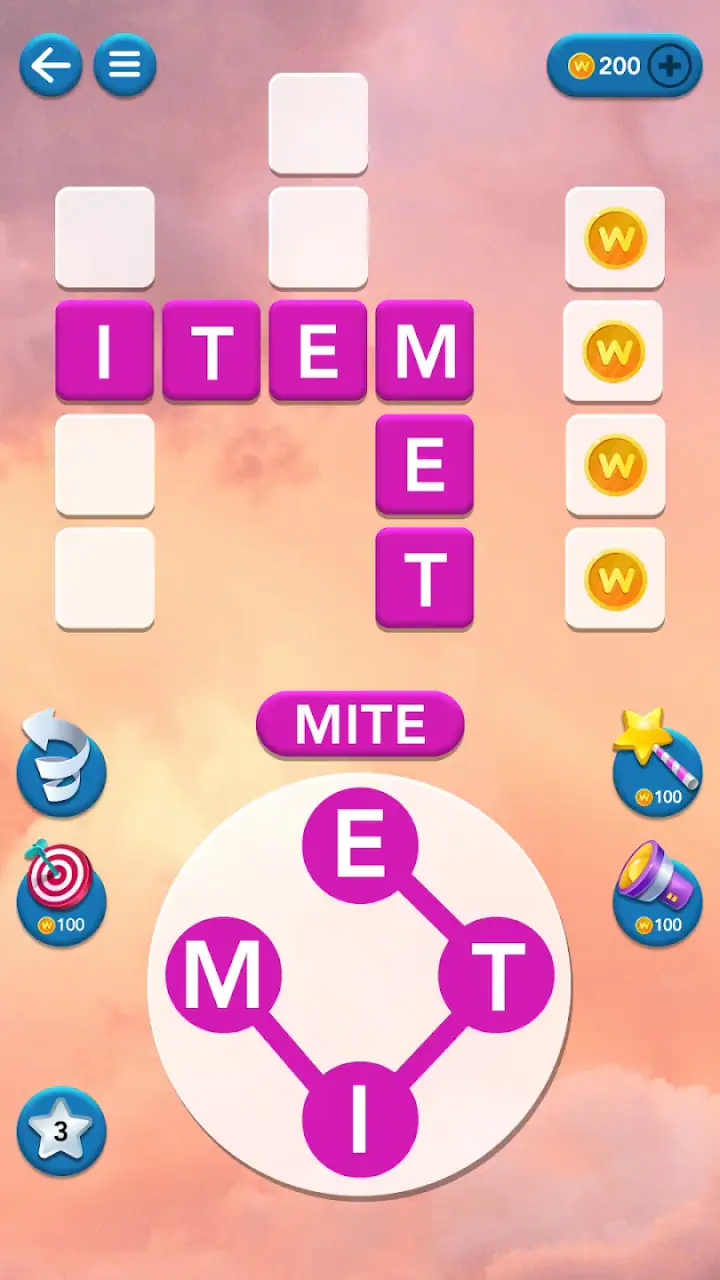
That is one of the less obvious strengths of this particular format: it can be used as a short exercise in error correction. I am not just retrieving words; I am testing a hypothesis against the rest of the grid. Players who enjoy logic puzzles may appreciate that layer, even if they are not especially interested in vocabulary games.
What makes it more useful than a quick word quiz
Compared with a standard word quiz, Crossword Daily gives me more context. A quiz usually presents a prompt and expects an isolated response. Here, the crossing structure supplies feedback without immediately giving away the solution. That makes a correct answer feel earned, and it also helps me understand why a wrong answer does not fit.
Compared with a paper crossword, the phone-based format is more convenient. I do not need a newspaper, a pencil, or a flat surface. I can pick it up for a short session and stop when my attention fades. The trade-off is that some people prefer the physical ritual of marking a page, and a screen cannot fully reproduce that feeling. For me, convenience wins during travel and waiting time, while paper remains more pleasant for a long, relaxed weekend session.
It also occupies a different space from fast word games built around timers, streak pressure, or rapid matching. Crossword Daily feels slower and more reflective. If you enjoy watching a score climb under pressure, this may seem restrained. If you want something that lets you think without demanding quick reactions, that restraint is a benefit.
The game has reached over one hundred thousand installs and holds a 4.7 average from around four thousand ratings, with more than seven hundred written reviews. Those figures suggest that the straightforward formula is connecting with a substantial group of players. I would not treat popularity as proof that every puzzle will suit every person, but it does support my impression that this is a dependable entry in the casual word-game space rather than an obscure experiment.
The limitations I noticed before recommending it
The same simplicity that makes the game approachable can also make it feel narrow. Crossword Daily is built around one main kind of activity, so players who need varied modes may lose interest. There is no reason to install it expecting a story-driven adventure, elaborate character development, or a broad collection of unrelated mini-games. Its value depends on whether solving crosswords is enough to keep you returning.
Difficulty is another personal dividing line. A player who already completes challenging newspaper crosswords may find the experience too gentle, especially if they want obscure vocabulary, cryptic clues, or highly specialized themes. On the other hand, someone new to crosswords may occasionally find a clue difficult for reasons that have little to do with logical skill. Vocabulary gaps can make a puzzle feel harder than its structure really is.
That creates an important trade-off. The game works well as an accessible daily exercise, but accessibility can limit the sense of discovery for advanced solvers. I would recommend trying it before paying for any optional content rather than assuming that a strong crossword background guarantees long-term satisfaction.
There is also the broader issue of in-app purchases. The game itself is free, but optional purchases range from $0.99 to $49.99 per item. That does not make the free version a poor deal, yet it is worth keeping in mind if you are trying to avoid spending inside games. I suggest deciding in advance whether you are comfortable with optional purchases and treating them as a convenience rather than something necessary to prove your skill.
For parents, the Everyone rating makes the game broadly approachable, but I would still encourage younger players to use it as a vocabulary activity rather than as a promise of academic progress. It can support curiosity about words, but a child may need a dictionary or an adult’s explanation when a clue introduces unfamiliar language. The game is most helpful when the answer becomes a starting point for learning, not when it is treated as a complete lesson.
Players should also consider the device requirement. The current version, 1.13.245, supports devices running Android 7.0 or later. That covers many phones, but anyone using an older Android device should check compatibility before planning around it. This is a small practical detail, yet it matters more than a feature list when a game is intended to become part of a daily routine.
Who will get the most from this game
I think the best audience is someone who wants a calm, repeatable puzzle for short sessions. It suits commuters, casual players, older readers who enjoy wordplay, and anyone trying to replace a few minutes of aimless scrolling with something more mentally active. It is also a reasonable choice for people returning to crossword puzzles after a long break because the familiar grid structure is easier to approach than a complicated game with many systems to learn.
A realistic use case would be a ten-minute evening routine. I might open a puzzle after putting my phone on charge, solve the clues I know immediately, and leave the stubborn entries for the next quiet moment. The important point is not to turn the session into a test of endurance. If I force myself to solve every clue in one sitting, the relaxing quality disappears. Used in short intervals, the game feels like a small reset between responsibilities.
It can also work well for language learners, with an important qualification. Crossword clues expose players to spelling and word relationships, but they may rely on cultural knowledge or meanings that are not obvious from a direct translation. I would use it alongside vocabulary notes, not as the only learning tool. Writing down unfamiliar answers and checking their usage afterward turns a fleeting puzzle solution into something more memorable.
Friends and family members who like comparing puzzle progress may enjoy discussing difficult clues, but this is not the right pick if your main goal is built-in competition or cooperative play. I would choose a multiplayer word game for a group gathering and reserve this one for individual concentration. That distinction helps avoid disappointment: its strength is personal focus, not social energy.
I would ask experienced crossword fans to approach it with realistic expectations. If your ideal puzzle includes layered wordplay and extremely demanding clues, a traditional specialist crossword source may be better. If you prefer a clean, low-pressure way to keep solving regularly, this game is more appealing. It is also a better match for players who value convenience over the tactile pleasure of paper.
HiPlay Games has kept the concept focused, and that focus is both its identity and its boundary. I never felt overwhelmed by menus or systems competing with the puzzle itself. At the same time, I did not find the surrounding experience especially compelling on its own. The reason to return is the crossword, so your long-term interest will depend almost entirely on how much you enjoy that loop.
My recommendation after using it
Crossword Daily is worth trying if you want a free, accessible word game that fits naturally into small breaks. Its best qualities are the familiar crossing-letter logic, the relaxed pace, and the low barrier to entry. I like that it encourages me to think carefully without making every mistake feel costly, and I can imagine keeping it installed for those moments when I want a useful distraction rather than a noisy one.
I would skip it if you need a substantial adventure, real-time competition, extensive variety, or advanced crossword difficulty from the first session. I would also be cautious about optional spending if you prefer games with no purchase prompts or if you are installing it for a child without discussing in-app buying first. Those are not minor details; they determine whether the otherwise simple experience feels comfortable.
The strongest way to use it is deliberately: solve the easy entries first, use crossing letters to challenge your assumptions, save unfamiliar words for later review, and stop when the puzzle stops feeling enjoyable. That approach brings out more value than rushing for completion. It turns a casual game into a small daily thinking exercise while keeping the pressure low.
With a 4.7 average and more than one hundred thousand installs, it has clearly found an audience, and my experience explains why. It does not reinvent crossword games, but it does not need to. For a quiet daily word challenge, the focused design is the point. I recommend it to casual solvers, beginners, and anyone who wants a few thoughtful minutes on a phone. I would point dedicated experts toward a more demanding alternative, but for everyday crossword practice, this free release from HiPlay Games is an easy one to keep in rotation.
FAQs for Crossword Daily
What is Crossword Daily?
Crossword Daily is a puzzle game centered on solving crossword grids through daily challenges. It is designed for players who enjoy vocabulary, spelling, and general-knowledge questions in short sessions. Each puzzle typically asks you to use intersecting answers to discover the correct words, making the game suitable for casual play as well as for users who want to exercise their language skills regularly.
How does the daily crossword challenge work?
The main attraction is the recurring daily puzzle, which gives players a fresh crossword to complete instead of requiring them to search through a large collection manually. You can usually solve clues at your own pace and return later if you get stuck. Depending on the version and available features, completed puzzles may also contribute to progress, streaks, scores, or other in-game achievements.
Is Crossword Daily suitable for beginners?
Yes, Crossword Daily can be approachable for beginners, although some clues may require a broad vocabulary or familiarity with trivia. New players can start by answering the easiest clues and using the crossing letters to work out more difficult entries. If the app includes hints or reveal options, these can help you learn the puzzle format, but using them may affect your score or completion record.
Does Crossword Daily require an internet connection?
An internet connection may be needed to download new daily puzzles, synchronize progress, display advertisements, or access optional online features. Some previously loaded puzzles might remain playable offline, but this can vary by device and app version. For the most reliable experience, open the app while connected to Wi-Fi or mobile data, especially when expecting a new daily challenge.
Is Crossword Daily free to download and play?
Crossword Daily is generally available as a free download, allowing users to try its core crossword experience without an upfront purchase. However, free versions may contain advertising, optional in-app purchases, premium content, or limits on hints and extra puzzles. Before downloading, check the current store listing for pricing, subscription details, supported devices, and any purchase requirements.
Pros
- Fresh crossword puzzle available every day
- Helpful hints make difficult clues more manageable
- Simple interface is easy to navigate
- Suitable for short
- relaxing play sessions
- Improves vocabulary and keeps the mind active
Cons
- Some puzzles may feel too easy for experienced players
- Hints can reduce the challenge and satisfaction
- Requires regular updates for new daily puzzles
- Small text may be uncomfortable on compact screens
- Limited appeal if you prefer varied game genres


